QUICK ANSWER
Quick Answer
A remote-controlled mower combines a powered cutting system, a drive system, and wireless controls so the operator can manage the machine from a distance. Depending on the design, these machines can be used on slopes, orchards, roadsides, rough ground, and other areas where conventional ride-on equipment may be inconvenient. For professional buyers, the key is not only how the mower is controlled, but how its chassis, cutting system, dimensions, and configuration match the actual working environment.
What Is a Remote-Controlled Mower?
A remote-controlled mower is a self-propelled mowing machine operated through a handheld remote controller rather than from a seat on the machine.
The operator can control functions such as movement, steering, and mowing while remaining at a distance from the equipment. This makes remote-controlled mowers especially useful for jobs where terrain, access, vegetation, or working conditions make conventional mowing equipment less convenient.
Professional users may consider this type of machine for vegetation management on slopes, orchards and farms, roadside areas, rough terrain, and larger property-maintenance projects.
The basic idea is simple: the operator controls the machine remotely, while the mower’s onboard systems provide propulsion and cutting power.
How Does a Remote-Controlled Mower Work?
Although individual models use different engines, chassis designs, and cutting configurations, most remote-controlled mowers rely on several systems working together.
Remote-Control System
The remote controller is the operator’s main interface with the machine.
Instead of sitting on the mower, the operator uses the controller to manage movement and working functions from a suitable position nearby. The exact controls vary by model, but the basic purpose is to give the operator direct control over the machine while maintaining a clearer view of the surrounding working area.
For buyers, the important point is not simply whether a machine has remote control. The control system needs to work together with the drive, steering, and cutting systems in a predictable and practical way.
Drive and Steering
Remote-controlled mowers are self-propelled.
Depending on the machine design, movement may be handled through tracked or wheeled running gear. The drive system controls forward and reverse movement, while independent or coordinated drive control allows the machine to change direction.
For rough or uneven ground, buyers should pay particular attention to the chassis design and how the machine maintains traction.
A machine that performs well on flat lawns may not necessarily be the right choice for loose soil, uneven ground, dense vegetation, or sloping terrain.
Cutting System
The cutting system performs the actual vegetation work.
Different mower designs may be intended for different types of grass, weeds, brush, or general vegetation management. Cutting width, cutting-height adjustment, blade or cutting-deck design, and available engine power all influence how a machine fits a particular job.
For commercial buyers, a wider cutting system is not automatically better. The right choice depends on working-area size, vegetation density, machine access, transport requirements, and the level of maneuverability required.
Chassis and Machine Movement
The chassis is especially important for remote-controlled equipment.
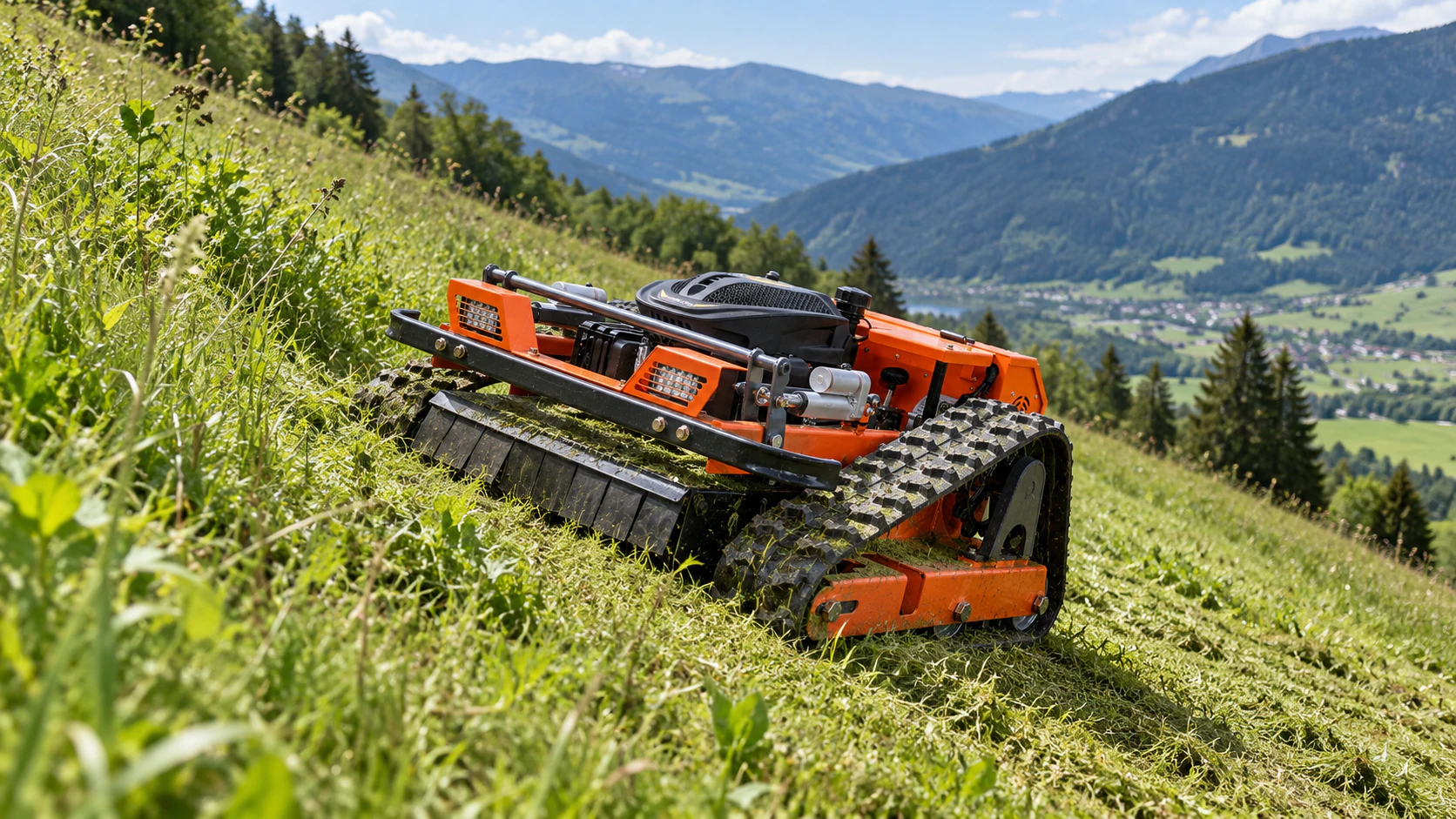
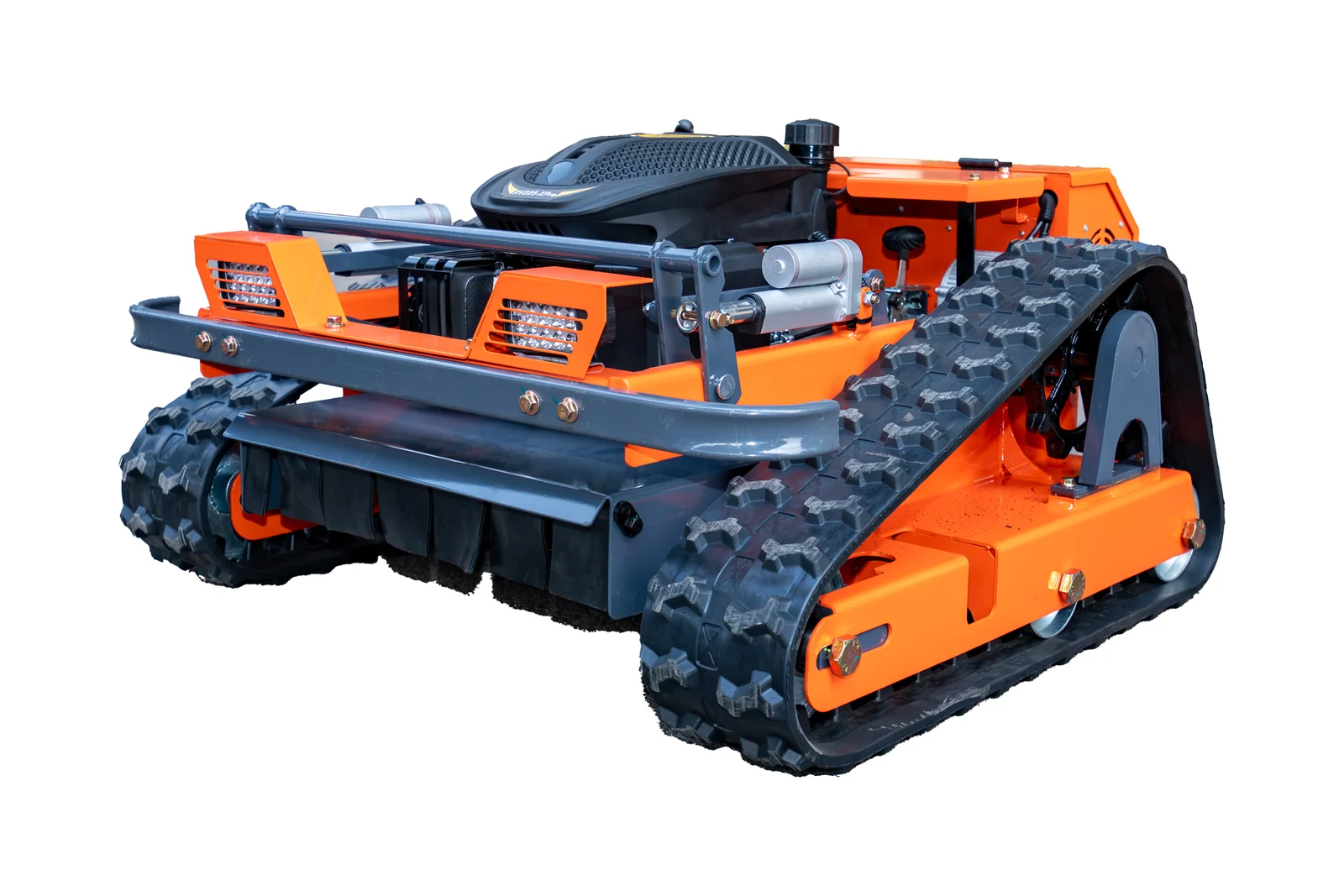
Tracked machines, for example, are often considered where traction, uneven terrain, or slope work is a priority. Machine width, overall dimensions, operating weight, and ground contact all affect where the mower can work and how easily it can be transported.
This is why buyers should evaluate the complete machine rather than focusing on a single specification.
Where Are Remote-Controlled Mowers Commonly Used?
Remote-controlled mowers can support a wide range of professional vegetation-management tasks.
On steep slopes, remote operation allows the operator to control the equipment from a more suitable position rather than riding directly on the machine.
In orchards and farms, compact equipment can be useful for managing vegetation around working areas where access and maneuverability matter.
For roadside vegetation, remote-controlled machines can help handle grass and vegetation along difficult or irregular terrain.
On rough terrain, the combination of self-propelled movement, a low machine profile, and suitable running gear can make this category of mower useful where ordinary lawn equipment is not ideal.
They can also be used for landscaping and property maintenance, especially where buyers need a compact machine for repeated vegetation-management work.
The machine still needs to be matched to the actual terrain and vegetation. A remote-controlled mower should not be selected only because a site has a slope or rough ground.
What Should Buyers Check Before Choosing a Model?
The best starting point is the working environment.
First consider the terrain. Is the site mainly flat, moderately sloped, steep, uneven, soft, or loose? Terrain affects the type of chassis and the level of traction required.
Next consider the vegetation. Short grass, tall weeds, dense vegetation, and rough growth do not create the same cutting requirements.
Buyers should also look at cutting width and working efficiency. A larger cutting width can help on open areas, while a more compact machine may make more sense where access and maneuverability are more important.
Machine dimensions and transport also matter. Dealers, contractors, and rental companies need to consider how the mower will be moved between jobs, stored, loaded, and unloaded.
Finally, the purchase itself may involve more than choosing a standard machine. B2B buyers may need configuration discussions, branding, documentation, packaging, spare-parts communication, or OEM/private-label support.
That is why a useful product comparison should consider the complete job—not just one headline specification.
Explore AVYARD Remote-Controlled Mowers
AVYARD offers a range of remote-controlled mowers for different working conditions and purchasing requirements.
Rather than choosing a model only from a single specification, buyers can compare machine size, cutting configuration, working requirements, access conditions, and the type of vegetation they need to manage.
For dealers, distributors, contractors, rental companies, and OEM buyers, AVYARD can also discuss product configuration, branding, packaging, documentation, and export preparation.
KEEP READING