QUICK ANSWER
Quick Answer
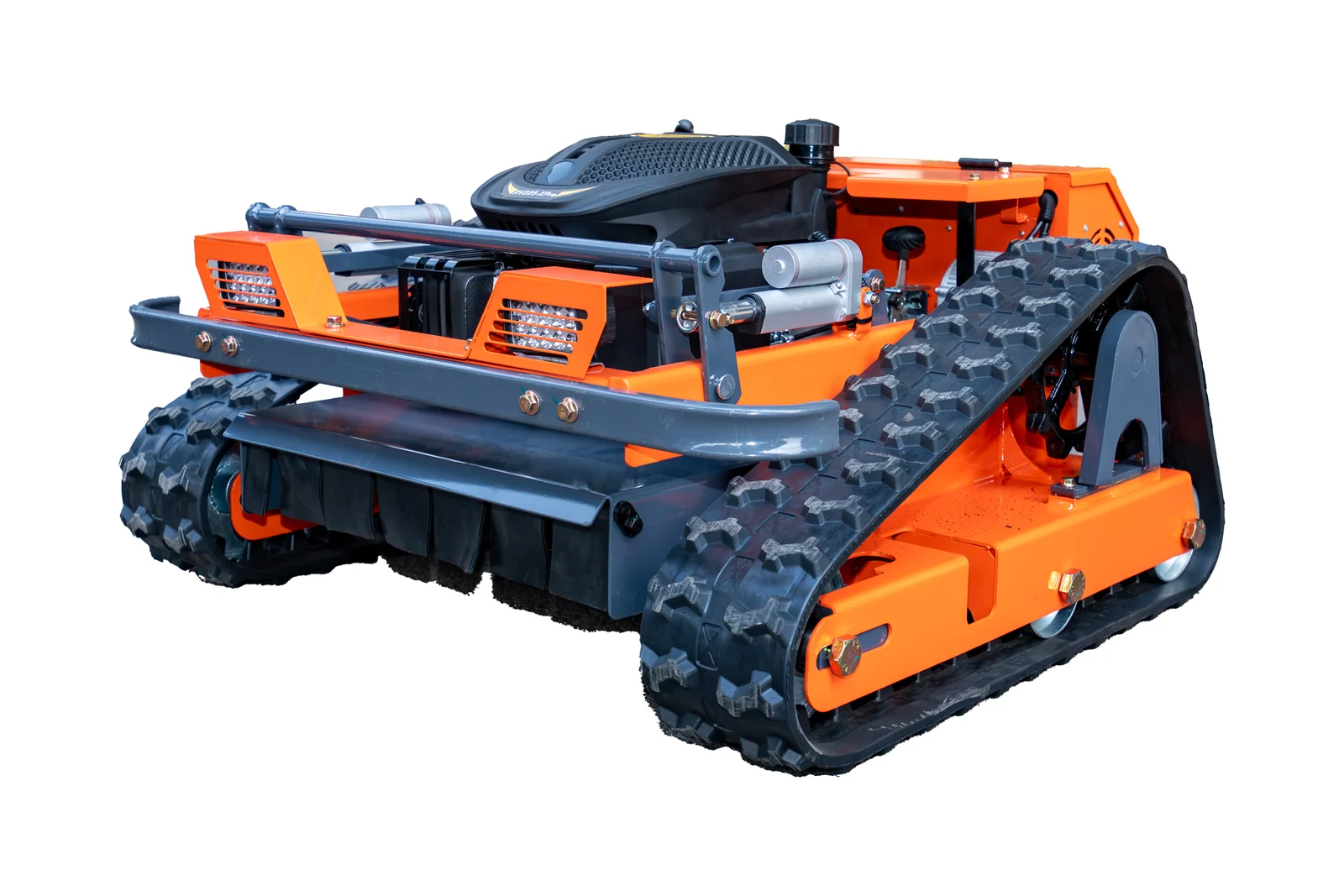
Choosing a remote-controlled mower should start with the job rather than the machine. Buyers should compare terrain, slope, vegetation, cutting requirements, access, transport, and working-area size before comparing individual models. A mower suited to open roadside vegetation may not be the same choice as one intended for orchard access or irregular sloping ground, so the best model depends on the full working environment.
Start With the Working Environment
A common mistake when selecting a remote-controlled mower is to begin with engine power, cutting width, or maximum slope figures.
Those specifications matter, but they only make sense when they are connected to the actual working conditions.
For professional buyers, the first question should be:
Where will the machine work most of the time?
A mower used on steep, uneven terrain has different priorities from one working between orchard rows. Roadside vegetation may involve large open areas and irregular ground, while property-maintenance work may require easier transport and more frequent movement between different sites.
The machine should therefore be selected around the job—not the other way around.
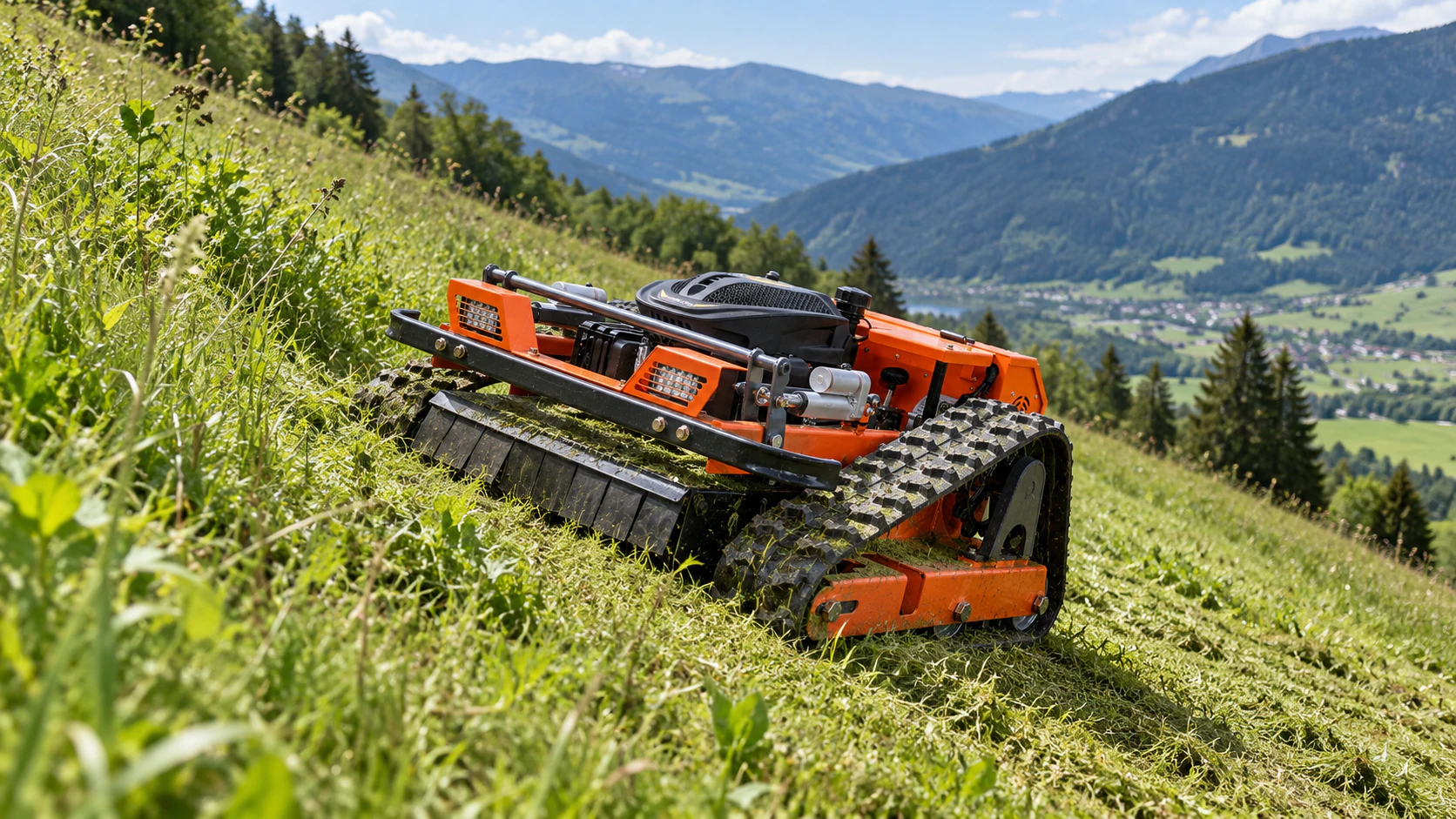
Choosing a Mower for Slopes
Slope work is one of the main reasons buyers consider remote-controlled mowing equipment.
However, the steepest number shown in a specification sheet should not be treated as the only selection criterion.
Actual working conditions also include ground traction, surface stability, vegetation, obstacles, operating direction, and weather conditions.
Dry, firm ground and wet or loose terrain can behave very differently even when the measured slope angle is the same.
For this reason, buyers should compare a mower’s chassis design, machine dimensions, running gear, operating weight, and published slope capability together.
Tracked remote-controlled mowers are often considered for projects where traction and uneven ground are important, but the correct model still depends on the complete site.
When discussing a slope project with a supplier, it is useful to provide photographs, approximate slope conditions, vegetation type, and details about the working area rather than simply asking, “What is the maximum slope?”
Choosing a Mower for Orchards and Farms
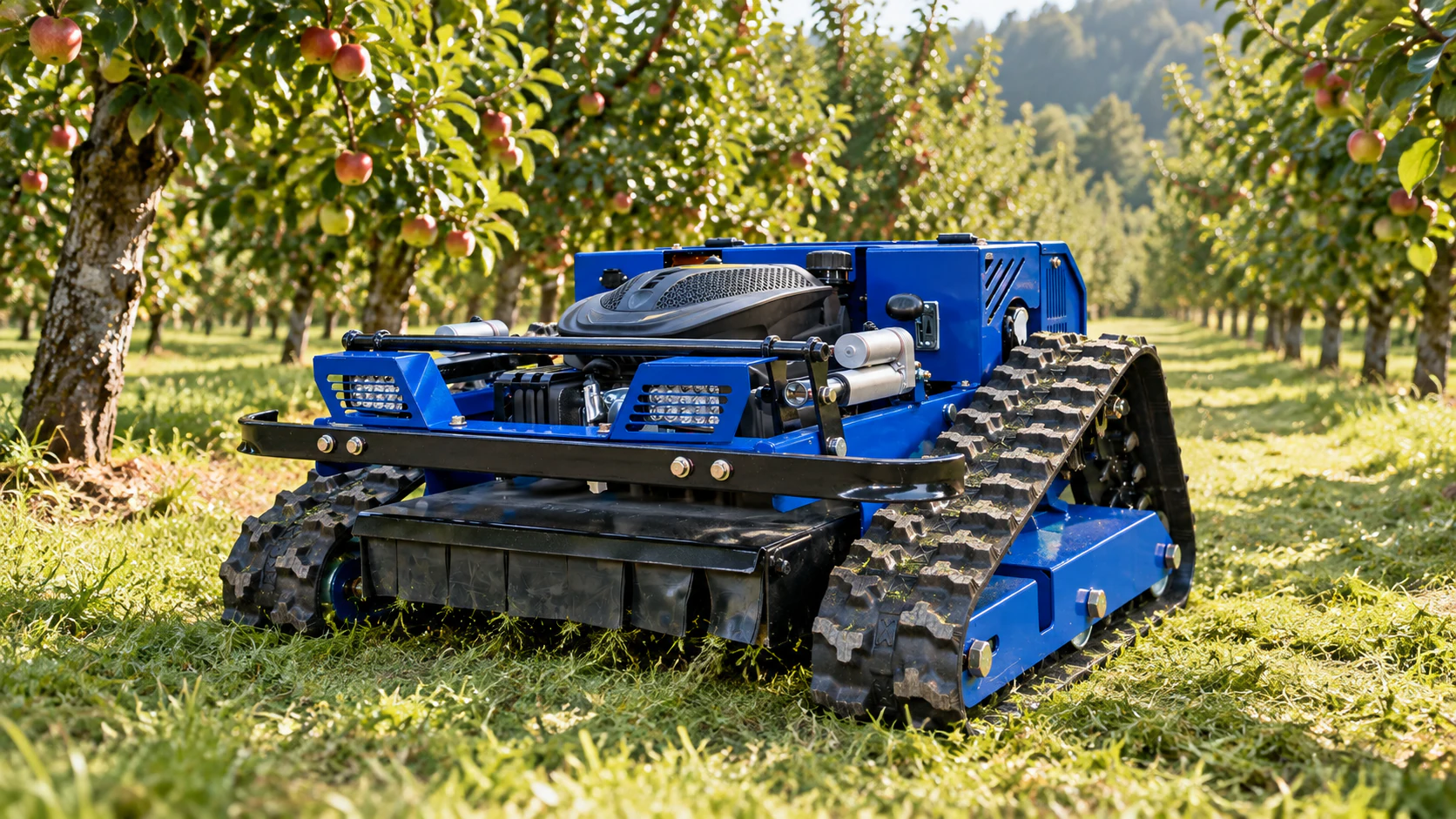
Orchard and agricultural environments create a different set of priorities.
Access width can become more important because the machine may need to work around trees, rows, fencing, or other obstacles.
Maneuverability also matters. A machine that is efficient on a large open slope may not automatically be the most practical option for tighter agricultural areas.
Buyers should consider overall machine dimensions, cutting width, turning behavior, vegetation type, transport, and how frequently the equipment needs to move between different parts of the site.
For orchard work in particular, a compact footprint can sometimes be just as important as mowing output.
Choosing a Mower for Roadside Vegetation
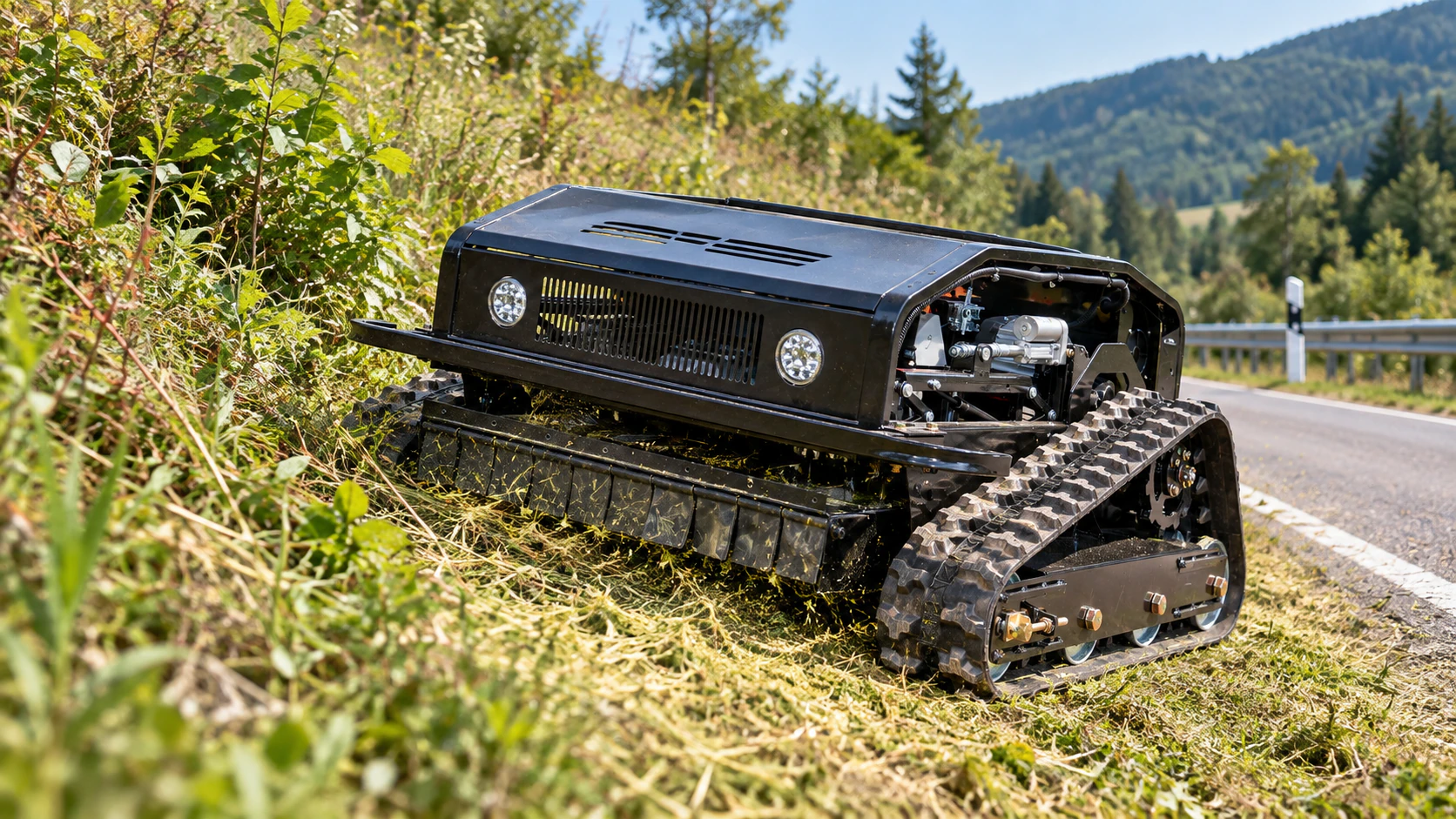
Roadside vegetation management can involve long working distances, uneven shoulders, slopes, tall grass, weeds, and irregular terrain.
The first consideration should be the vegetation itself. Buyers should understand whether the work mainly involves grass, weeds, heavier growth, or mixed vegetation.
The next consideration is terrain.
Roadside work can change quickly from relatively level ground to embankments or uneven surfaces, so a machine needs to be selected for the actual range of conditions rather than a single ideal scenario.
Working efficiency also becomes more important on larger areas. Cutting width, operating speed, transport between sites, and the practical time required to cover an area all influence equipment selection.
For contractors and maintenance companies, machine transport and repeat daily use may be just as important as cutting performance.
Rough Terrain Requires More Than Power
A powerful engine alone does not make a mower suitable for rough terrain.
On irregular ground, buyers should also look at chassis design, traction, machine balance, ground clearance, cutting configuration, and overall dimensions.
Dense vegetation can also change the working load significantly.
This means two sites with similar area and slope may still require different machine configurations if the vegetation and surface conditions are different.
A practical buying process should therefore combine terrain information with vegetation information.
Think About Cutting Width and Working Needs
Cutting width affects productivity, but a wider mower also changes the overall machine footprint.
For open areas, a wider cutting system may help increase coverage.
For orchards, tighter access, transport constraints, or more complex working areas, a smaller machine may sometimes be easier to manage.
Buyers should also consider how frequently cutting height needs to change and what type of vegetation the mower will encounter.
The goal is not to select the largest available machine. It is to choose the machine whose working dimensions and cutting system best match the job.
Do Not Ignore Access and Transport
B2B buyers often focus on how a machine performs after it reaches the site, but transport and access are part of the purchasing decision too.
Before choosing a mower, check:
- how the machine will enter the working area;
- whether there are gates, narrow passages, rows, or obstacles;
- how it will be loaded and transported;
- where it will be stored;
- whether one machine will serve several different job sites.
These practical details can eliminate unsuitable models before more detailed specification comparisons are needed.
How to Compare Remote-Controlled Mower Models
A useful comparison should bring several factors together rather than ranking machines from “best” to “worst.”
Start with the application and terrain.
Then compare machine dimensions, cutting width, cutting-height range, engine or power configuration, chassis design, operating weight, and other confirmed specifications that relate directly to the job.
For a contractor, productivity and transport may be the priority.
For an orchard operator, machine width and maneuverability may matter more.
For a dealer or distributor, the decision may also include product range planning, market requirements, branding, documentation, spare-parts communication, and future repeat orders.
AVYARD’s remote-controlled mower range includes multiple models intended for different requirements. The product category page is the best place to compare the currently available machines and their published specifications.
Discuss Your Working Conditions With AVYARD
If you are not sure which model fits your project, the most useful information you can send is information about the job itself.
Photos or videos of the terrain, approximate slope conditions, vegetation type, access restrictions, expected working area, and purchasing requirements can make product discussions much more useful than simply requesting the largest or most powerful machine.
AVYARD works with international B2B buyers, including dealers, distributors, contractors, rental companies, equipment buyers, and OEM/private-label customers.
KEEP READING